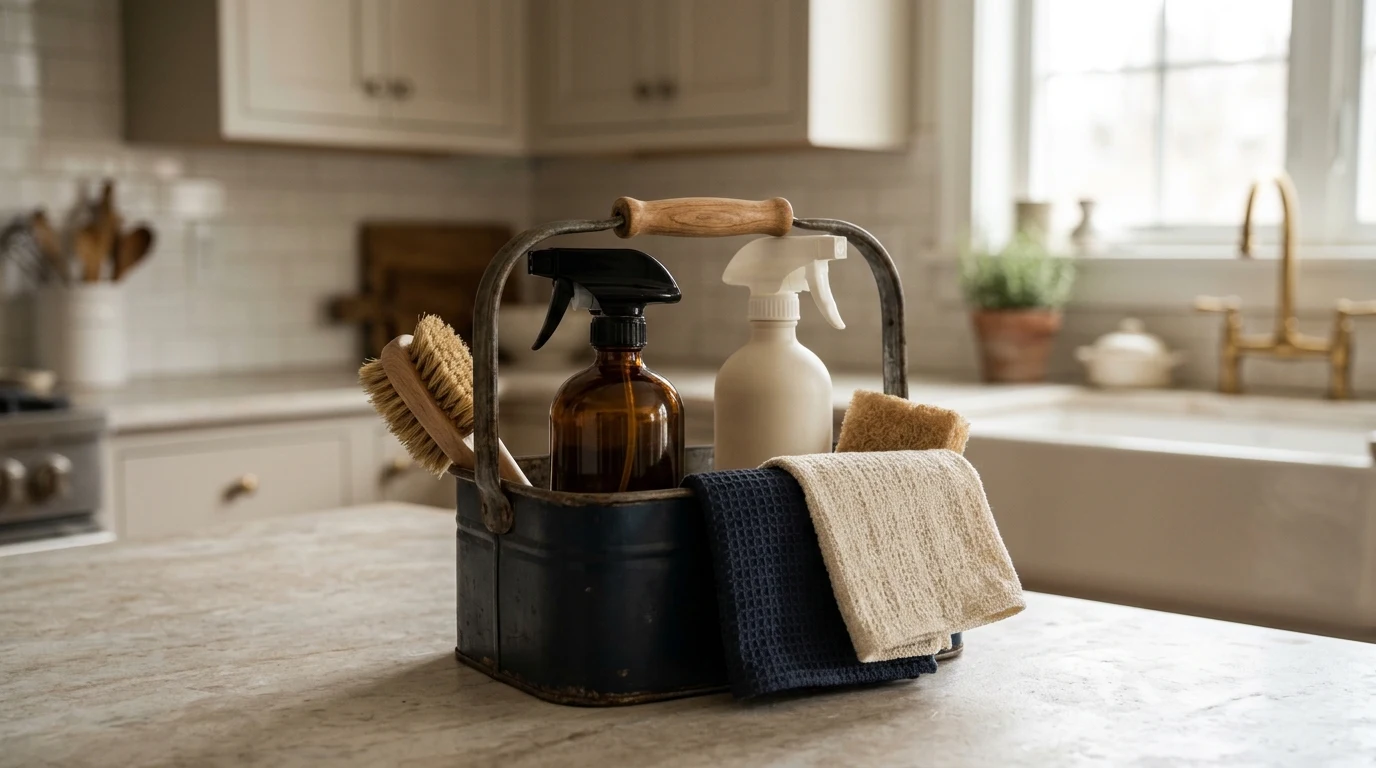
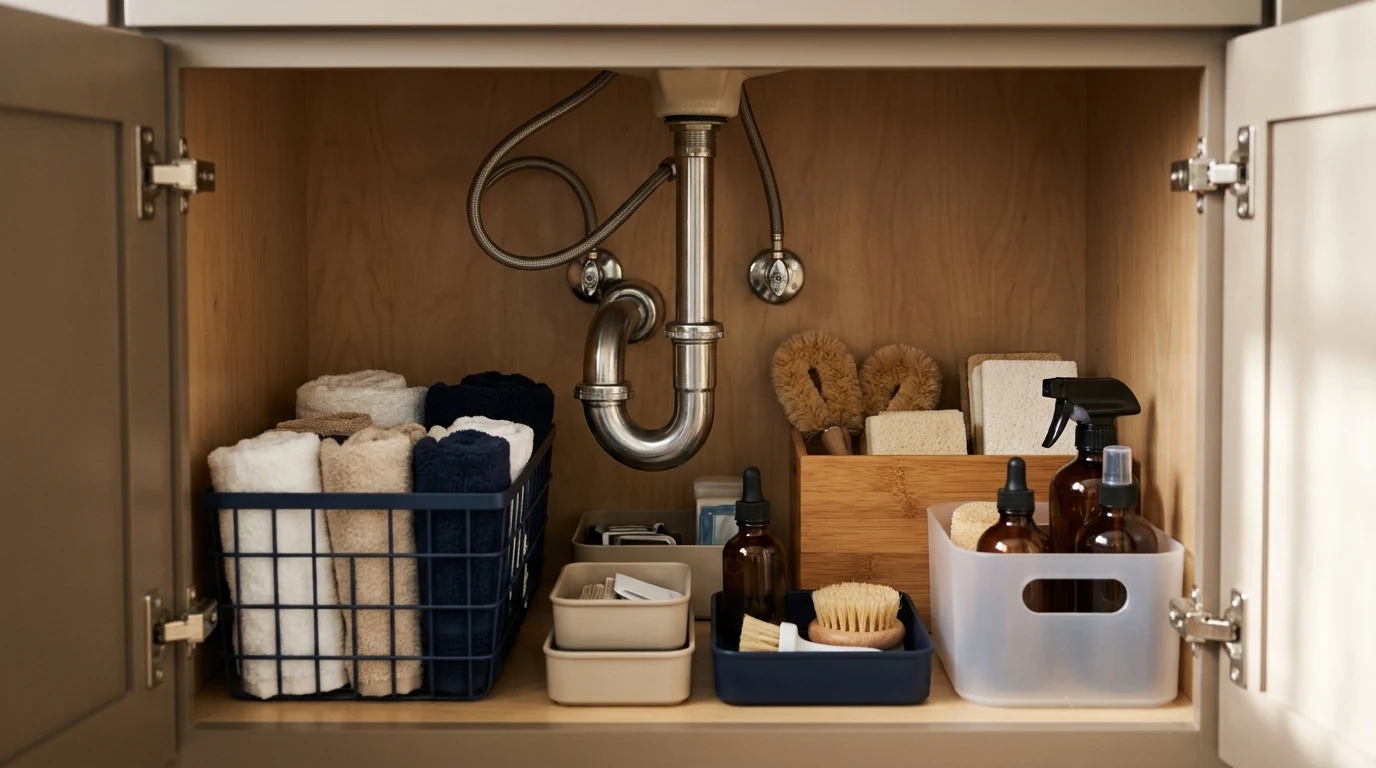
To organize under the bathroom sink, first find out what is making the cabinet fail, then solve that problem. A cabinet full of pipes needs a different fix than one with a damp floor or bottles lost at the back. Clear it out, check for leaks, and then use the sections below to match each problem with its fix.
This takes about 30 minutes for one vanity. Do not buy anything until the cabinet is empty and you have checked it for moisture, because a hidden leak will ruin whatever you put in there.
Start Here: Empty It and Check for Leaks
Take everything out and wipe the cabinet floor. Then look closely at the pipes and the base.
- Run the water for a minute and feel around the pipe joints
- Check for warped wood, stains, or a musty smell
- Look for rust on metal shelves or cans
If you find water, deal with that first. The EPA advises fixing plumbing leaks as soon as possible and drying water-damaged areas within 24 to 48 hours to prevent mold growth. Renters should tell the landlord.
Quick Diagnosis
| What you see | Likely cause | Fix |
|---|---|---|
| Nothing fits around the pipes | Square bins in an irregular space | Split the cabinet into two sides |
| Bottles lost at the back | Deep cabinet, no way to reach | Pull-out drawers or a turntable |
| Items tip over constantly | Tall bottles standing loose | Short bins that contain them |
| Sticky rings on the shelf | Leaks from caps and pumps | Washable trays and a liner |
| Too much stuff to fit | Duplicates and expired products | Edit before adding storage |
Problem 1: The Pipes Are in the Way
Stop trying to use the cabinet as one space. The drain divides it into a left side, a right side, and a shallow strip in front. Choose narrow bins for each side and leave the center alone. U-shaped organizers built for sinks can help, but only if you measure the distance from the drain to the back first.
Keep clear access to the shutoff valves. You will need them quickly if something goes wrong, so nothing should block them.
Problem 2: You Cannot Reach the Back
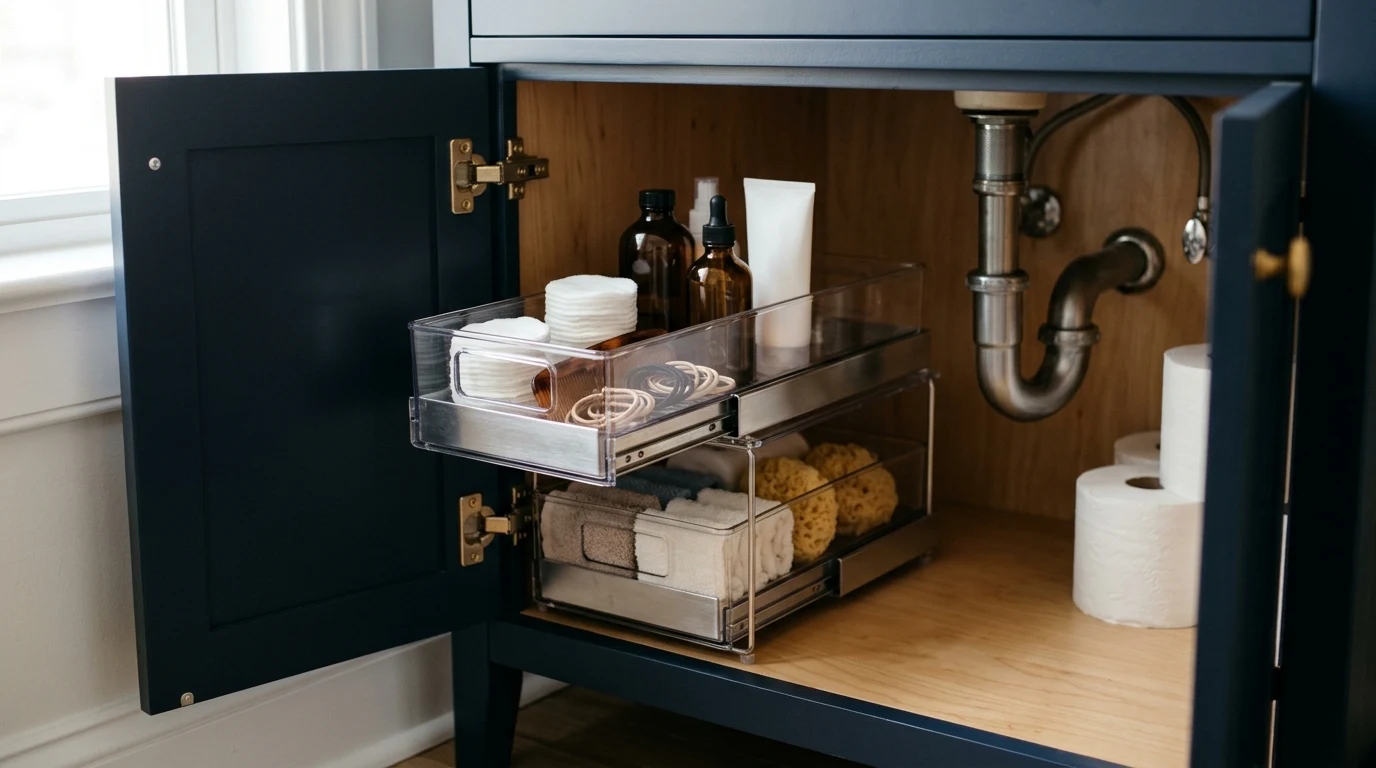
Items at the back get forgotten and then rebought. Stacking pull-out drawers bring the whole depth of the cabinet forward, which suits small items such as razors, cotton, and travel sizes. If the door opening is narrow, measure it too, since it may be tighter than the cabinet interior.
Problem 3: Bottles Keep Falling Over
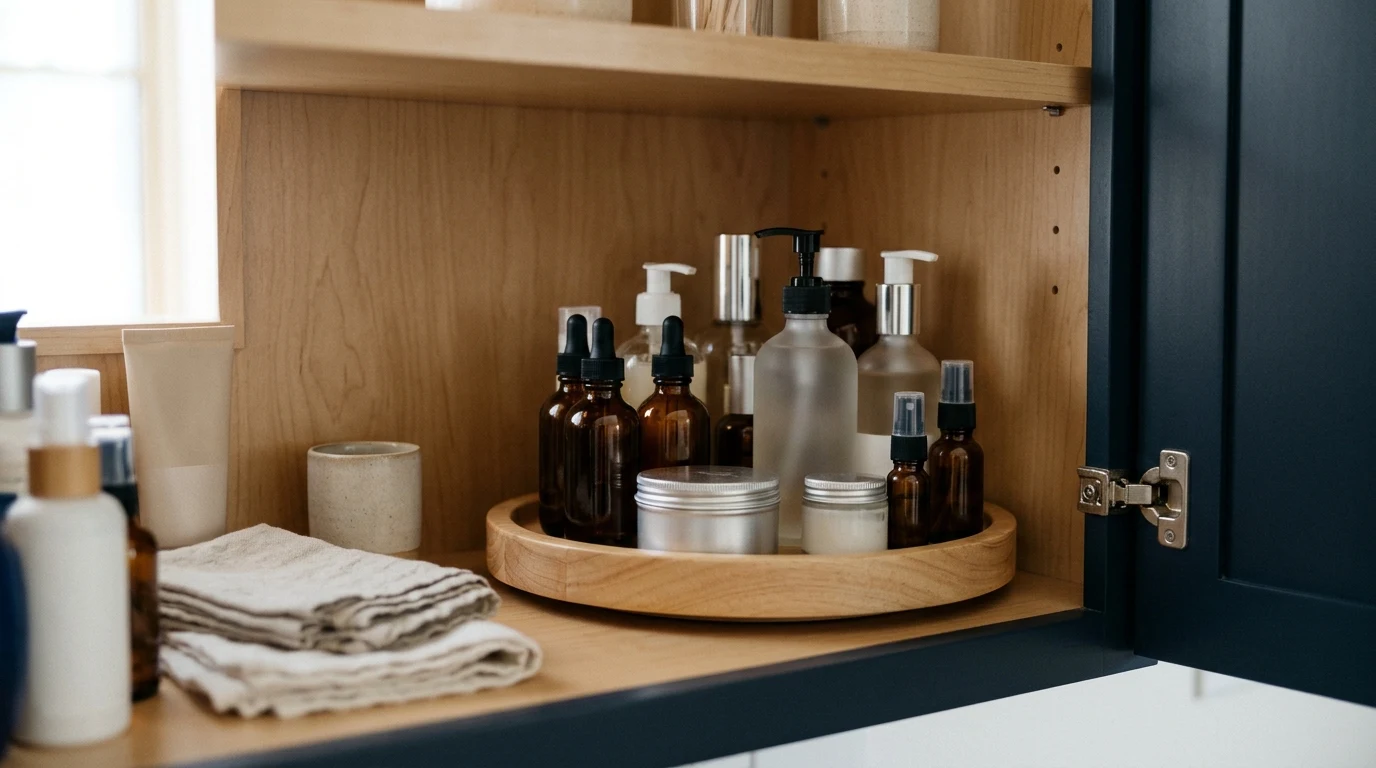
A turntable is the simplest fix for tall bottles because it brings every one within reach with a single spin. Use one in a corner of the cabinet, and use short open bins for the rest. Group by use: hair, skin, and cleaning items each get a place, so you can pull out the whole bin at once.
Problem 4: Spills and Sticky Shelves
Line the cabinet floor with a waterproof mat or washable tray. It protects the wood and shows you quickly when something has leaked. Store anything that drips inside a bin, not directly on the shelf, and close caps fully before putting bottles away.
Problem 5: There Is Simply Too Much
Storage products cannot fix an overfilled cabinet. Check dates on sunscreen, medicine, and cosmetics, and throw out anything expired or separated. Keep one open product of each kind and store the backups elsewhere. If you need help with the sorting itself, use our step-by-step decluttering method or print the Decluttering Starter Checklist.
Old cleaners need care on the way out. The EPA warns against pouring household hazardous products down the drain and suggests reading labels for disposal directions and looking for local collection programs.
What Not to Store Under the Sink
| Item | Why to move it | Better place |
|---|---|---|
| Medicine | Damp, changing conditions | A cool, dry shelf out of children’s reach |
| Cardboard boxes | Absorb moisture | Plastic bins |
| Extra towels | Can hold dampness | Linen closet or shelf |
| Cleaners, in homes with children | Easy for small hands to reach | High shelf or latched cabinet |
If young children live in the home, add a safety latch to the door even after you have moved the riskiest products.
Sample Layouts You Can Copy
Once the cabinet is empty and dry, a simple plan helps you put things back with intention. Choose the row that matches your vanity.
| Vanity type | Left side | Right side | Front strip |
|---|---|---|---|
| Single door | Pull-out drawer for daily items | Not available | Slim bin of cleaning cloths |
| Double door | Turntable for bottles | Stacking drawers for small items | Spare toilet paper |
| Shared bathroom | One bin per person | One bin per person | Shared items only |
| Pedestal sink, no cabinet | Slim rolling cart beside the sink | Wall shelf above the toilet | Basket on the floor |
Label each bin in a way that makes sense to everyone who uses the room, especially if it is shared. A label is what keeps a system going once someone else starts putting things away.
A Quick Monthly Check
Because this cabinet stays closed, problems can grow without anyone seeing them. Once a month, take one minute to look inside:
- Touch the base of the cabinet and check for damp spots.
- Smell for anything musty.
- Look at the tray or liner for new leaks from bottles.
- Pull out one empty or expired product.
- Confirm the shutoff valves are still easy to reach.
This small habit protects the cabinet and keeps the system from slowly filling back up.
Next Stop: The Rest of a Small Home
Once the vanity works, use the same approach on the next tight spot. The kitchen often has the same setup with a bigger pipe, and our guide to smart storage for small kitchens has more ideas for rooms where every inch has to earn its place.

Jhonathan Verne runs Exodus Flow from Montgomery, Alabama, and is responsible for its guides on decluttering, small-space organization, and daily routines. Contact: contact@exodusgamers.com.