
A cleaning schedule for working moms works when it is built around the time you really have, not the time a perfect week would give you. The simplest version is one short daily reset, one focus area per weekday, and nothing that needs a full free Saturday. Below are three ready plans you can copy, based on how many minutes you can give each day.
No plan will survive every sick day or late meeting, so each one is designed to be skipped without falling apart. Miss a day and you pick up the next one. There is no catching up.
Choose Your Plan by Available Time
Be honest about a normal Tuesday, not your best one. Pick the smallest plan you could keep up during a busy month, because you can always do more on a good day.
| Plan | Daily time | Best for | What you give up |
|---|---|---|---|
| Survival | 15 minutes | Full-time jobs, young kids, or solo parenting | Deep cleaning happens only monthly |
| Steady | 30 minutes | Most working households | Windows and closets wait for monthly slots |
| Thorough | 60 minutes | Part-time schedules or older kids who help | More evening time |
The Daily Reset Everyone Does
Every plan starts with the same four tasks. They stop mess from compounding, which is what makes weekend cleaning feel so large.
- Clear and wipe the kitchen counters
- Run or unload the dishwasher
- Do a quick sweep of the worst floor area
- Return items in the main living area to their places
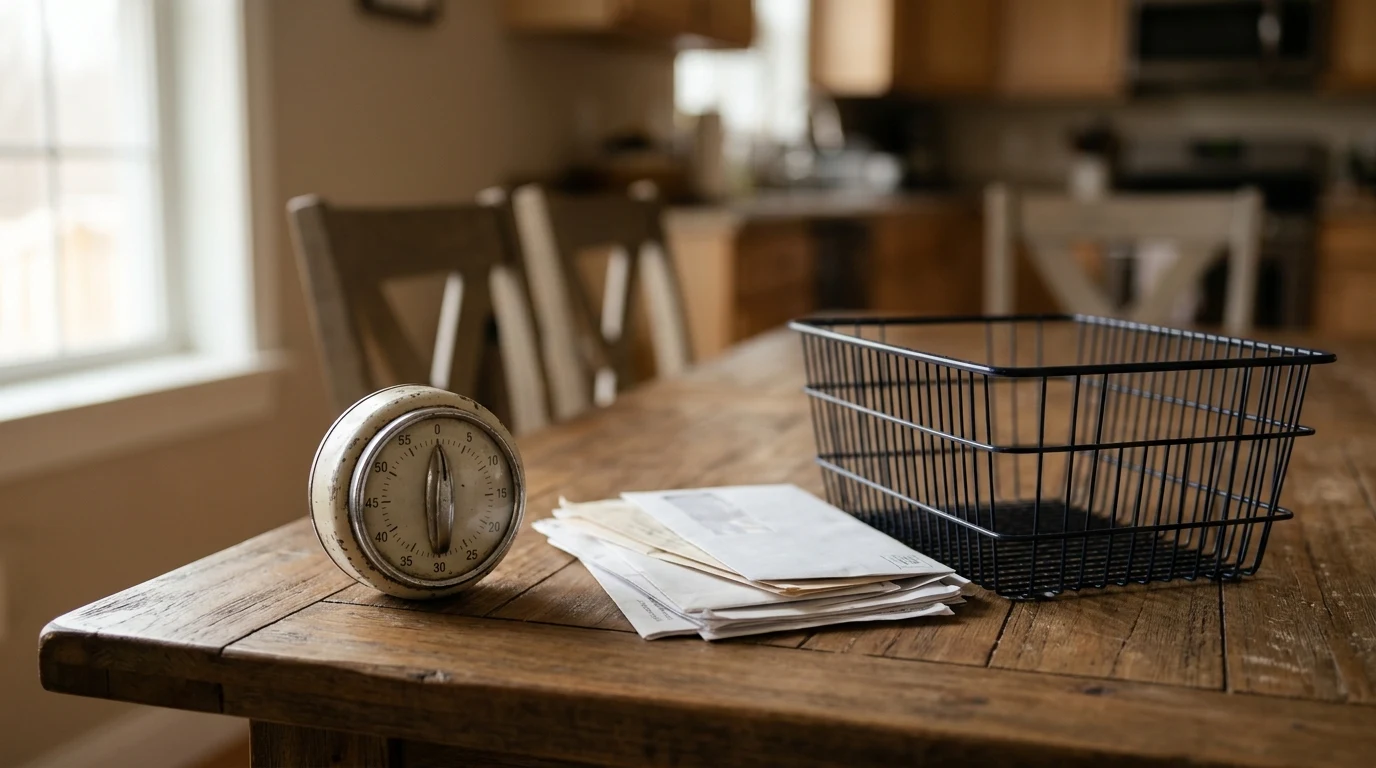
Set a timer for ten minutes and stop when it rings. If you want this set up as a routine with your own tasks, our Daily Home Reset Routine Builder lets you put one together.
The Weekly Plan, Day by Day
On top of the reset, each day gets one area. This table shows the 30-minute Steady plan. For the 15-minute plan, do the first task only. For the 60-minute plan, add a second round or a monthly job from the next section.
| Day | Focus | Tasks |
|---|---|---|
| Monday | Bathrooms | Toilet, sink, mirror, then shower if time allows |
| Tuesday | Floors | Vacuum main rooms, then mop the kitchen |
| Wednesday | Laundry | Wash and put away bedding or towels |
| Thursday | Kitchen | Clear old food, wipe the fridge shelves and microwave |
| Friday | Dusting | Dust main surfaces, empty all trash cans |
| Saturday | Catch-up or rest | Only what was skipped and still bothers you |
| Sunday | Plan | Look at the week ahead and move tasks around busy days |
Swap days to fit your week. If Wednesday is your long day, move laundry to a slower one. For the Sunday slot, our simple time blocking method shows how to find these slots without building a rigid calendar.
Monthly Jobs That Fit on One Line
Rotate one of these per week so nothing piles up and no weekend disappears:
- Wipe baseboards and light switches
- Clean the oven or stovetop parts
- Wash shower curtains and bath mats
- Vacuum under furniture and beds
Split the Work So It Is Not All Yours
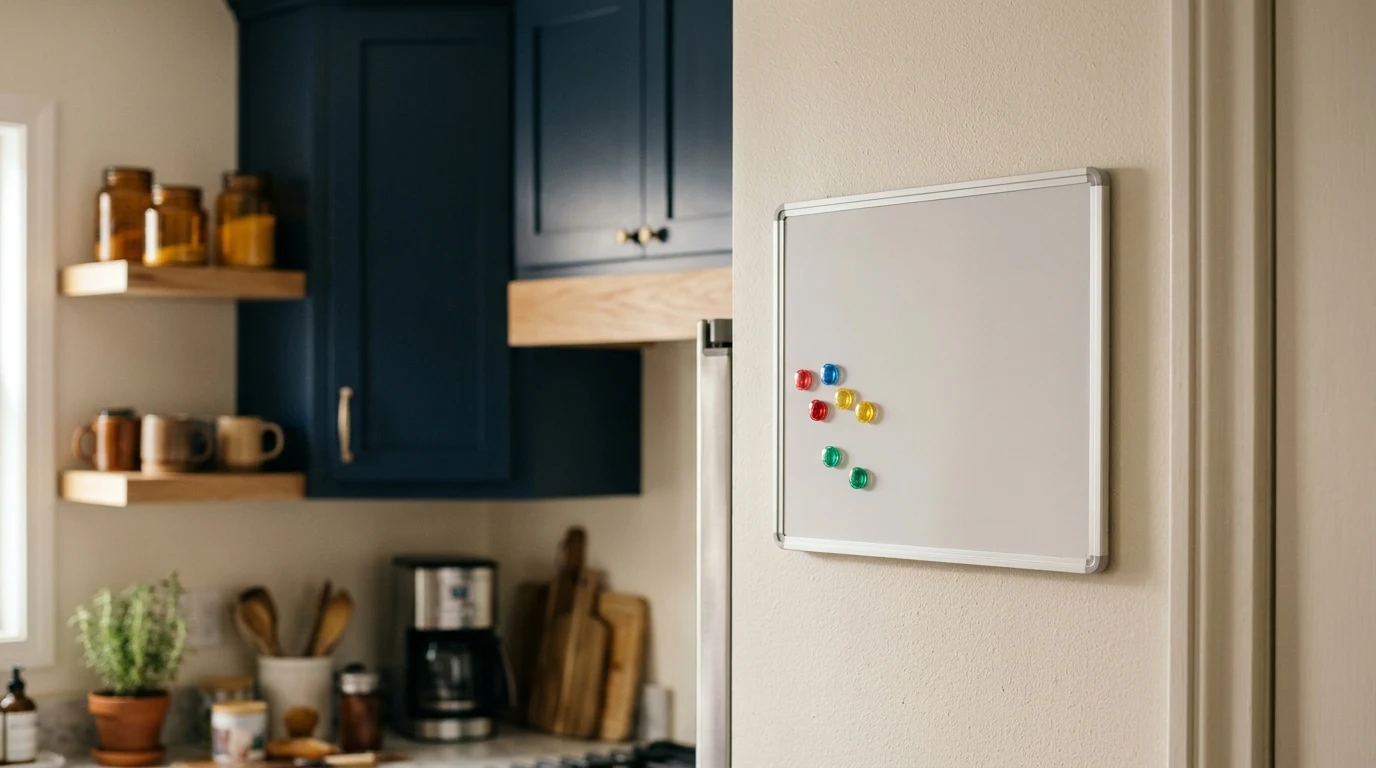
A schedule only one person follows will fail the moment that person is tired. Put the plan somewhere everyone can see it, and give each task a name. A shared board in the kitchen removes the need to ask and remind.
The imbalance shows up in national data. The American Time Use Survey for 2025 found that 87 percent of women and 75 percent of men did household activities on an average day, and that on those days women spent an average of 2.8 hours on them, compared with 2.1 hours for men. Those figures cover all adults and include cooking and household management, not only cleaning.
| Age | Tasks kids can usually take on |
|---|---|
| Toddlers | Put toys in a basket, help carry socks |
| Ages 5 to 8 | Set the table, feed pets, match socks |
| Ages 9 to 12 | Vacuum, empty the dishwasher, take out trash |
| Teens | Clean a bathroom, do their own laundry, cook a simple meal |
Adjust to your child, and keep cleaning products out of reach of younger kids. A partner takes whole areas, not occasional help. “Floors and trash are yours” works better than “can you help me tonight.”
Make Each Task Faster to Start
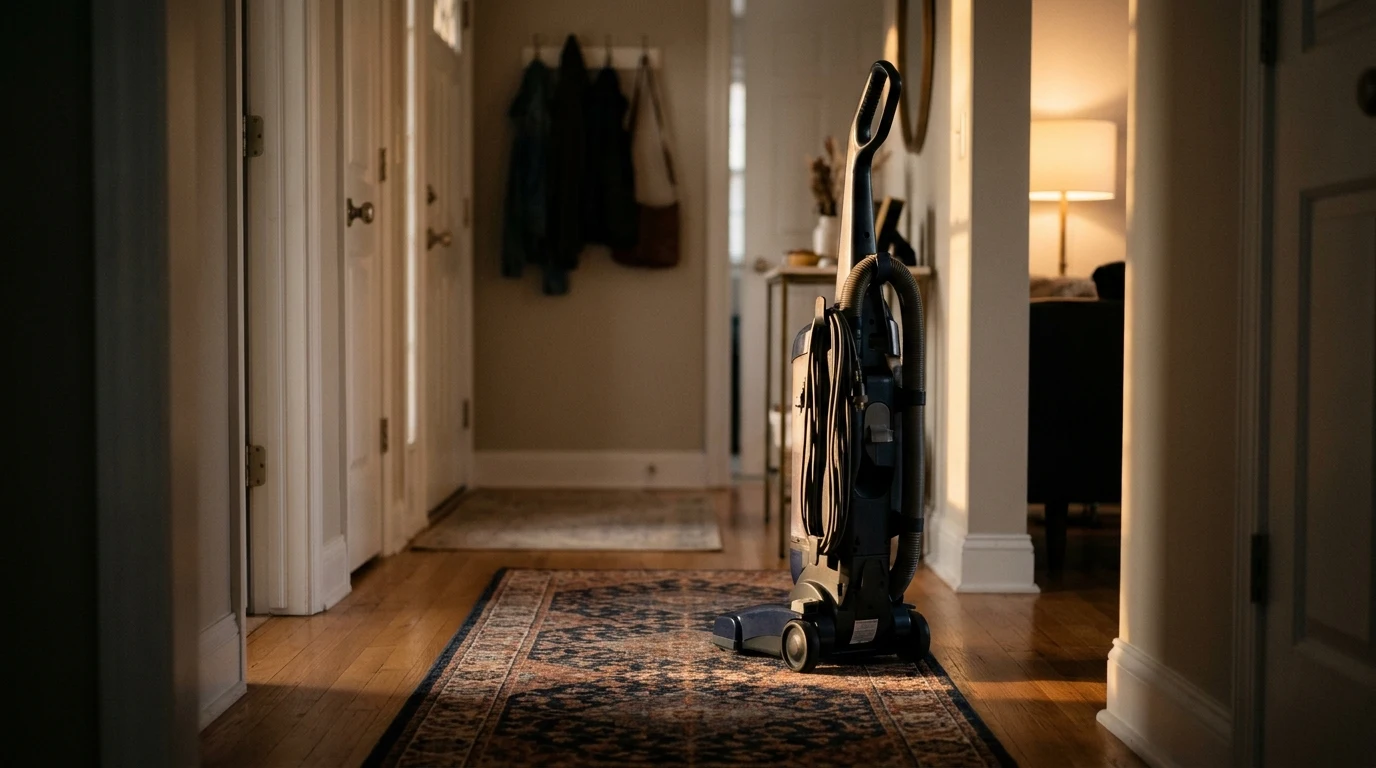
Most of the friction is in getting ready. Keep a small caddy with your cleaners and cloths, and store a second set in the bathroom if you can. Keep the vacuum near the rooms you clean most, not at the back of a closet. Follow the directions on each product and never combine cleaners. The EPA advises reading product labels because some household products can be hazardous when mixed with other chemicals or disposed of carelessly.
Reducing what you own is the other shortcut, since every item on a surface has to be moved before you can wipe it. Our guide to keeping a home clutter-free without constant cleaning covers the habits that make these daily slots shorter.
What to Do When the Week Falls Apart
Some weeks will break the plan, and the schedule should bend instead of collapsing. Decide in advance what counts as the minimum so you do not have to think about it when you are tired. For most homes, that means clean dishes, clean clothes for tomorrow, and a usable bathroom. Everything else can wait a few days without causing a real problem.
| Situation | Keep doing | Drop for now |
|---|---|---|
| Sick child or parent | Dishes, trash, one load of laundry | Floors, dusting, weekly focus |
| Busy stretch at work | Ten-minute reset, bathrooms once | Fridge wipe, monthly jobs |
| Travel or a weekend away | Trash out, sheets changed before leaving | Everything else until you return |
| Back after a bad week | Restart at today’s task | Any attempt to catch up on missed days |
If you have room in the budget, paying for occasional help with one heavy job can be cheaper than losing every weekend. A deep clean twice a year or a laundry service during a hard month is a practical choice, not a failure of the plan.
Your First Week
Start with the daily reset only for three days. Add the weekday focus once the reset feels automatic. At the end of the week, cross out any task nobody missed and move it to the monthly list. A short plan you keep will always beat a full one you abandon.

Jhonathan Verne runs Exodus Flow from Montgomery, Alabama, and is responsible for its guides on decluttering, small-space organization, and daily routines. Contact: contact@exodusgamers.com.