To organize a laundry room, start by matching your storage to the type of space you have, then set up one simple path for clothes: dirty, sorted, washed, dried, folded, gone. Most laundry rooms become messy because clothes and supplies have nowhere to land, not because the room is too small. Even a closet can run well with a shelf, a hanging spot, and a sorter.
This guide compares the common setups so you can skip the advice that does not fit yours, then covers what to do with supplies, drying, and moisture.
Which Setup Do You Have?
Your space sets your options. Find your layout in this table and focus on its best upgrade first.
| Space | Main problem | Best first upgrade | Avoid |
|---|---|---|---|
| Dedicated room | Becomes a dumping ground | Clear a folding surface and keep it clear | Storing unrelated household items |
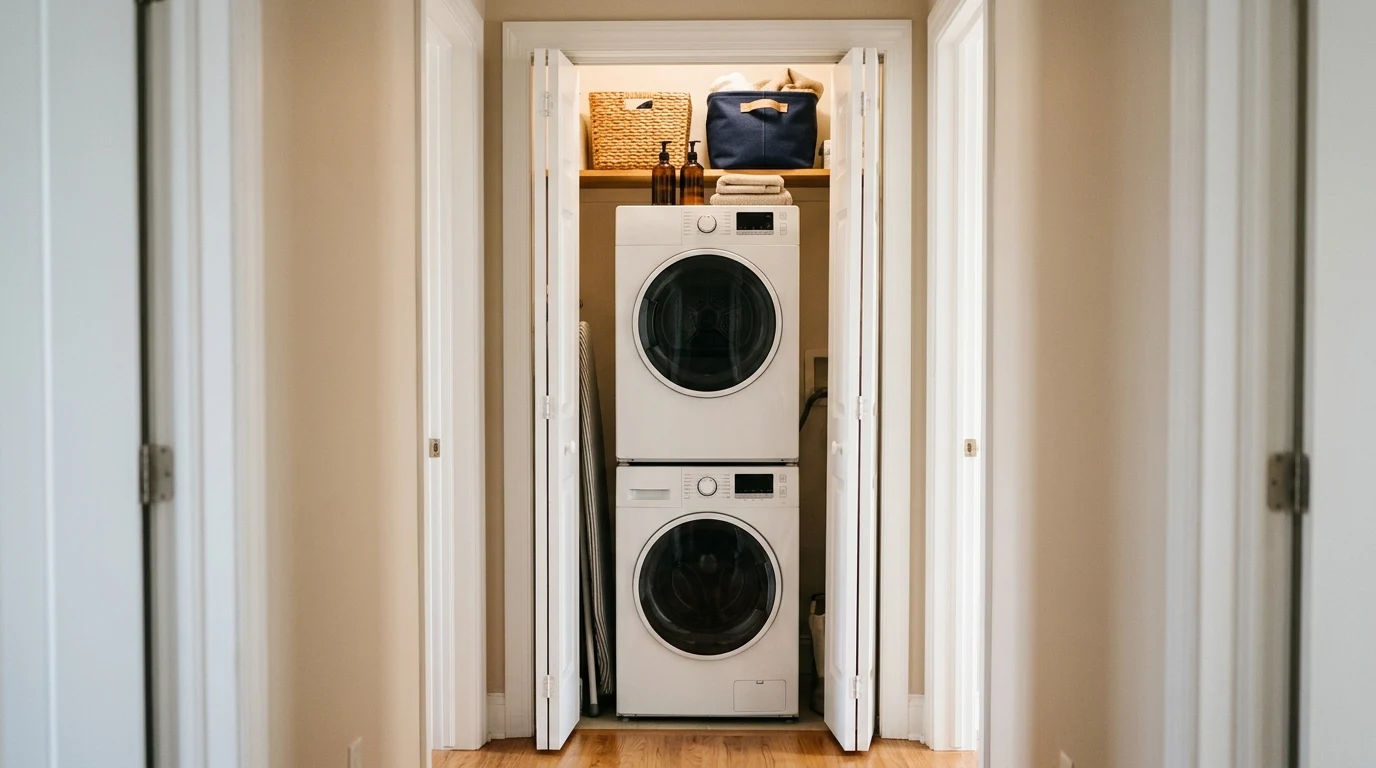
| Laundry closet | No surface, doors in the way | Shelf above the machines, slim rack on the door | Deep bins you cannot reach |
| Hallway or kitchen nook | Always visible | Closed cabinet or curtain | Open shelves full of bottles |
| Basement or garage | Damp and far from bedrooms | Raised shelving, a rolling hamper | Cardboard on the floor |
Empty the Space and Decide What Belongs
Take everything out, including what lives on top of the machines. Throw away dried-up bottles and combine duplicates. Anything that has nothing to do with laundry should find a new home, even if it has lived there for years.
A good laundry space holds detergent, stain treatment, a few cleaning items, a lost-sock container, and hangers. Paint cans, pet food, and tools are the usual invaders. If you are unsure how to dispose of old chemicals you find, check the product label and your local collection program.
Sort Before Laundry Day
A sorter removes a whole step from the process. Clothes go into the right section when they come off, so each load is ready to wash.
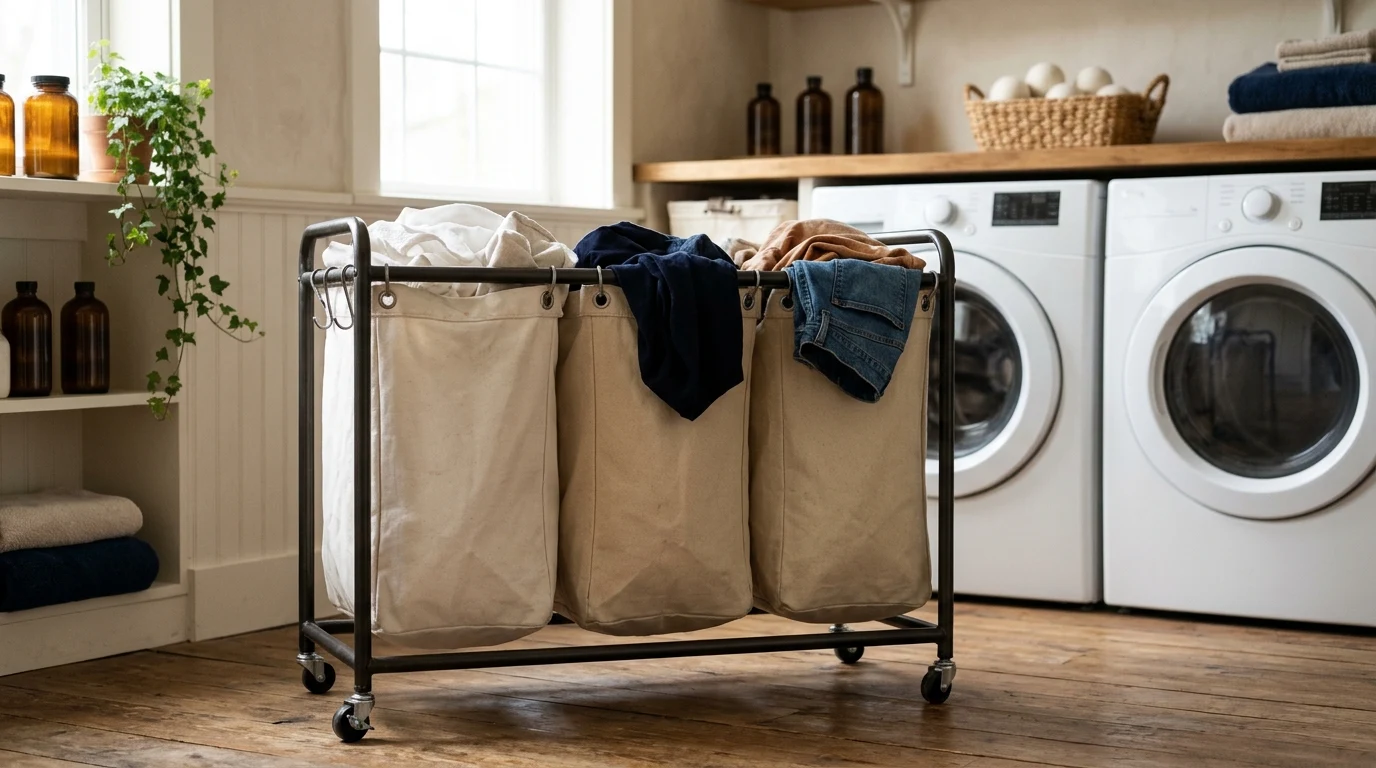
Three sections suit most homes: lights, darks, and towels or bedding. If you have a closet, use stacked baskets or a narrow rolling sorter that fits beside the machine. In bedrooms, a single hamper for each person works fine, as long as someone empties them on a set day.
Use the Walls and the Space Above the Machines
The wall above the washer is usually the largest unused area in the room. A single shelf holds most of what you need. Keep the items you use for every load at a height you can reach without stretching, and put spare supplies higher.
- Shelf above the machines: baskets for supplies, one per category
- Rod under the shelf: a place to hang shirts straight from the dryer
- Back of the door: slim rack for sprays and stain sticks
- Side gap: a narrow rolling cart, if your machines allow it
Before you mount anything, measure the door swing and check that lids and doors can still open fully. Renters should use freestanding shelves or check the lease first. The same vertical thinking appears in our space-saving ideas for tiny apartments.
Create a Spot for Folding and Drying
If clothes have nowhere to be folded, they end up on a bed or sofa. A dedicated room can use a counter across front-loading machines. In a closet, a fold-down shelf or simply the top of the dryer can be enough.

For drying, a wall-mounted or fold-down rack takes no floor space when closed. In a small apartment, a slim folding rack can live behind a door between uses.
Set Up a Supply Zone You Can Use With One Hand
You usually arrive at the machine with your arms full, so the items you need for every load should be reachable with one hand. Group supplies by how often you use them, and leave the rest out of the way.
| How often | Examples | Where to keep it |
|---|---|---|
| Every load | Detergent, dryer sheets or wool balls | On the shelf nearest the washer door |
| Weekly | Stain remover, mesh bags | A basket at eye level |
| Now and then | Bleach alternatives, sewing kit, iron | High shelf or closed bin |
| Backups | Spare detergent and refills | Top shelf, one of each only |
Pour detergent into a smaller container if the large bottle is too heavy to lift over the machine, but keep the original label attached or copy the directions. Add a small jar for coins and pocket finds, and a bin for lost socks with a monthly rule: if the match has not turned up by then, the sock goes.
Finally, give the space a two-minute close after each laundry day. Empty the sorter, wipe up drips, and return supplies. Short habits like this are what keep a small room from filling up again, as our guide to maintaining a clutter-free home explains.
Keep Moisture Under Control
Laundry areas stay damp, especially in basements and closets with closed doors. The EPA says moisture control is the key to mold control and advises fixing plumbing leaks as soon as possible. Leave the washer door open between loads when you can, wipe up spills, and keep storage off a floor that gets wet. Clean the dryer lint filter as the manual directs.
FAQ
What should be stored in a laundry room?
Store only what supports washing, drying, and basic cleaning: detergent, stain remover, hangers, a sorter, and a few rags. Move everything else elsewhere.
How do you organize a laundry room with no cabinets?
Install one open shelf above the machines and use baskets to hide small items. If you cannot drill, use a freestanding over-the-washer shelf.
How can I hide a laundry area in a kitchen or hallway?
A curtain, folding doors, or a simple cabinet front will do it. Leave room for airflow and for servicing the machines.
Finish the Loop
The system ends when clean clothes are put away. If that step keeps failing, the problem may be the closet, not the laundry room. Our guide on maximizing closet space can make that final step much easier.

Jhonathan Verne runs Exodus Flow from Montgomery, Alabama, and is responsible for its guides on decluttering, small-space organization, and daily routines. Contact: contact@exodusgamers.com.