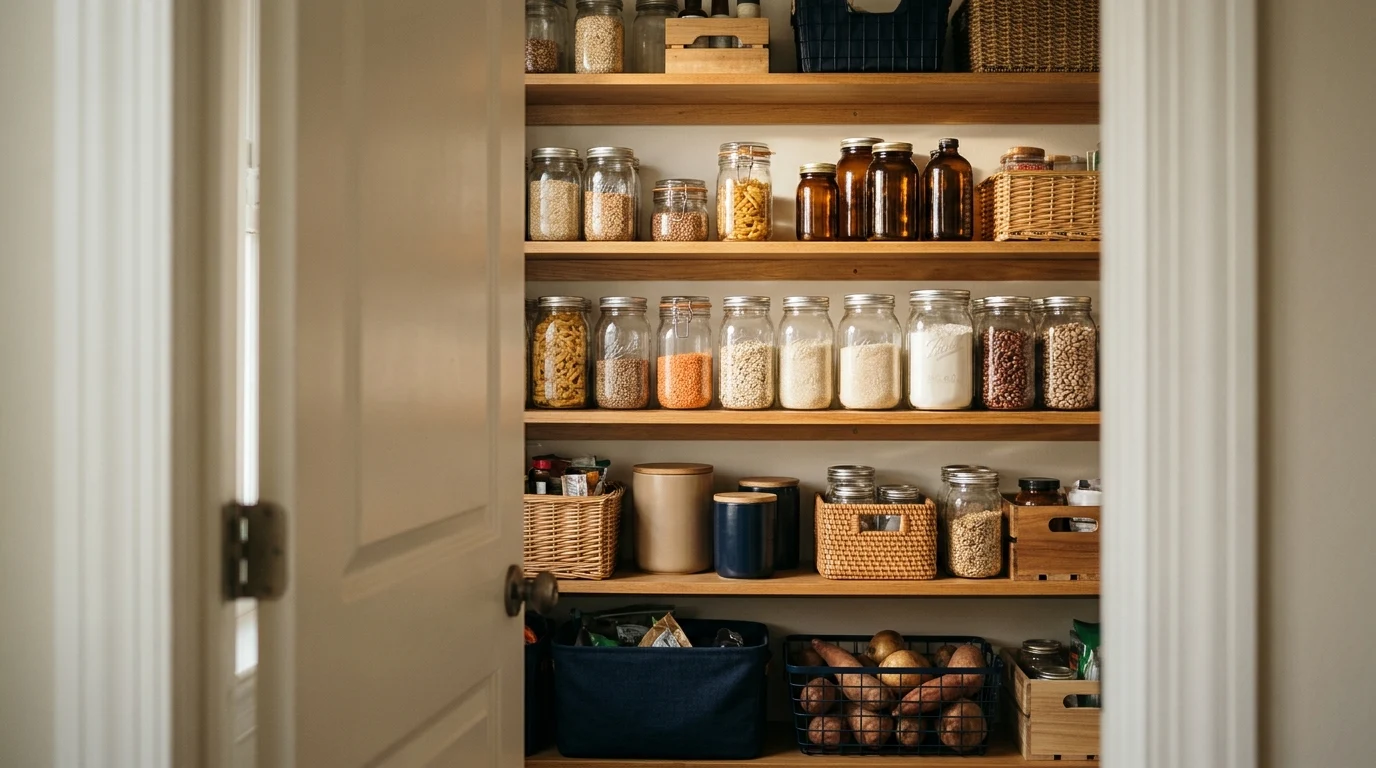
To organize a small pantry, sort food into categories you actually cook from, keep what you use most at eye level, and make sure you can see every item without moving another. Matching jars are optional. A small pantry fails when food gets hidden behind other food, so visibility matters more than the way it looks.
Much of the popular advice is built for large walk-in pantries with room to spare. These six myths explain what goes wrong when you apply it to a small space, and what to do instead.
Myth 1: You Need to Decant Everything Into Matching Jars
The truth: jars help with some foods and hurt with others. They take up fixed space and need refilling, and in a small pantry that time and space are limited.
Decant only what is bought in awkward bags, such as flour, rice, pasta, and snacks that spill. Leave cans, jars, and sturdy boxes alone. If you do decant, cut out the cooking directions and expiration date and tape them to the container so that information is not lost.
Myth 2: Deep Shelves Give You More Storage
The truth: deep shelves give you more places to lose things. Food pushed to the back gets forgotten, expires, and gets bought again.
- Use bins as drawers, so you pull the whole group forward
- Put a turntable in each corner for oils and sauces
- Keep one row of cans visible instead of three rows hidden
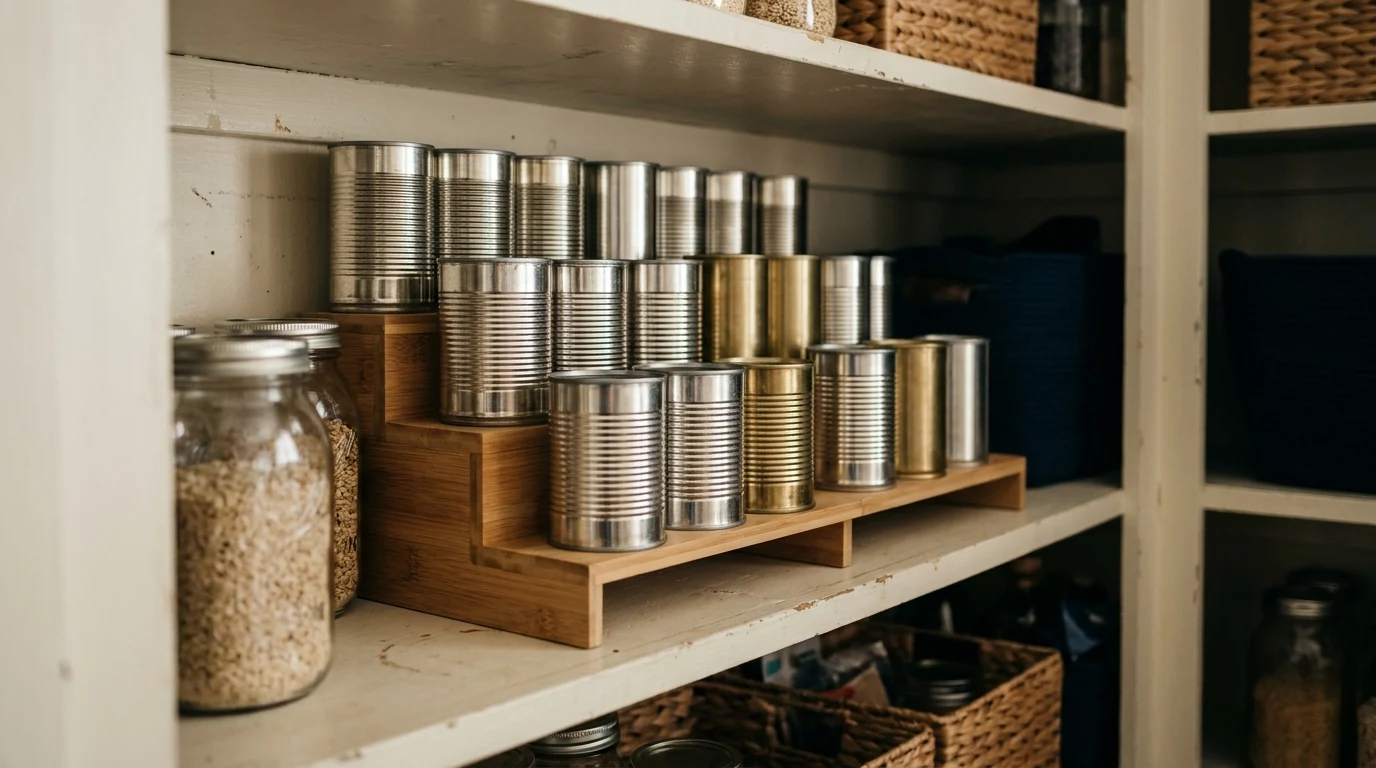
Tiered step shelves lift the back row so you can read every can from the front. They are one of the few pantry products that repay their cost in a small space.
Myth 3: A Small Pantry Should Hold Everything Food-Related
The truth: it only has to hold what you use regularly. Bulky appliances, holiday bakeware, and backup paper goods can all live somewhere else.
Move rarely used items to a high shelf, a closet, or under a bed. If the kitchen has no real pantry at all, a rolling cart or open shelf can stand in for the missing storage.
Myth 4: Organize by Food Type Alphabetically or by Brand
The truth: sort by how you cook. A “taco night” bin beats a perfect row of canned goods, because everything you need for a meal comes out together.
Try this shelf map and adjust it to your own height and habits:
| Shelf | What goes here | Why |
|---|---|---|
| Top | Backups, rarely used items | Hard to reach, low use |
| Eye level | Everyday cooking staples | Used most often |
| Waist level | Snacks, breakfast, lunch items | Easy for everyone to reach |
| Bottom | Heavy items, potatoes, bulk bags | Safer to lift |
| Door | Spices, packets, wraps | Slim items that need little depth |
Myth 5: The Door Is Off Limits
The truth: the back of a pantry door is often the best storage you have left, as long as the door still closes.
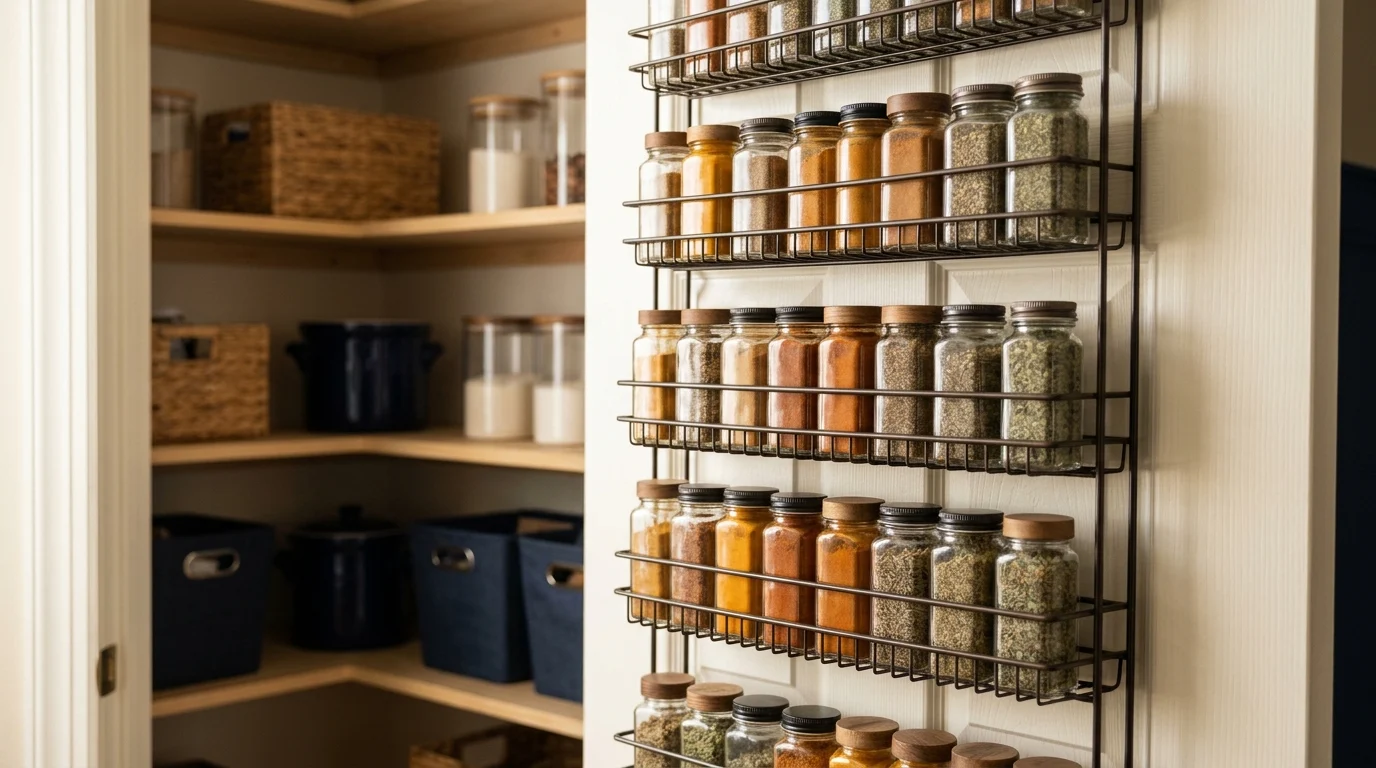
A slim over-the-door rack holds spices, seasoning packets, and small jars. Measure the clearance between the door and the shelves when closed, and check the weight limit. In a rental, choose an over-the-door style that needs no screws.
Myth 6: If It Is Canned, It Can Go Anywhere
The truth: not every can belongs on a shelf. The USDA notes that some canned foods, such as some canned ham and seafood, are not safe at room temperature and are labeled “Keep Refrigerated.” Read labels when you sort.
Keep the pantry away from heat where you can, and avoid storing food above the stove. While you have everything out, throw away anything expired and put older items in front of newer ones, so you use them first.
What If You Do Not Have a Real Pantry?
Plenty of small homes have only one cabinet or a shelf for dry food. The same rules still apply, but the storage options change.
| Your space | What works | Watch out for |
|---|---|---|
| One kitchen cabinet | Shelf risers and a turntable | Heavy jars on a thin shelf |
| Slim gap beside the fridge | A narrow rolling cart | Blocking the vent or door swing |
| Bare wall in the kitchen | Open shelves with lidded containers | Food left in thin paper bags |
| Closet in a nearby hallway | Overflow for backups only | Forgetting what you stored there |
Buying less at once is the most useful change a small pantry can make. Bulk deals save money only if you have room to store them and enough time to finish them before they expire. Keep a short list of staples you always buy, and shop from what is already on your shelves first.
A Five-Minute Check Before You Shop
Look through the pantry before each big grocery trip. Move anything close to its date to the front, write down what has run out, and use one forgotten item in that week’s meals. This simple check prevents most duplicates, and it keeps food from getting lost again after all the work of sorting it.
If the pantry keeps overflowing despite this, look at what you bought and did not eat in the past month. Those are the foods to stop buying. A smaller, well-used stock will always feel roomier than a full shelf you cannot see into.
A One-Hour Plan for This Weekend
- Empty the pantry onto a table and wipe the shelves.
- Remove expired food and donate what you will not eat.
- Group what remains by meal or use.
- Measure the shelves, including the depth and height.
- Assign each group a shelf using the map above.
- Use the bins you already own for a week before buying more.
If a section feels messy after a week, the container is the wrong size or the group is too broad, so adjust it. For ideas on applying the same logic to the drawers next to it, see our guide on choosing the first area to declutter, and map the whole space with our free Small Space Organization Planner.

Jhonathan Verne runs Exodus Flow from Montgomery, Alabama, and is responsible for its guides on decluttering, small-space organization, and daily routines. Contact: contact@exodusgamers.com.